I have a couple of ideas that I want to my music magazine to be like. Personally I want my music magazine that I am going to create to have simple colours that represents the genre of music that I have chosen hip hop, a good example of this would be the vibe magazine that it released a special issue for its 15 year anniversary that had simple colours that related to the genre. I like the boldness of the title that makes the master head to stand out. and the fact that it is very simple colour scheme that works on the music magazine . This was very effective and this is the kind of thing that I have an interest in it and want my magazine to look like.
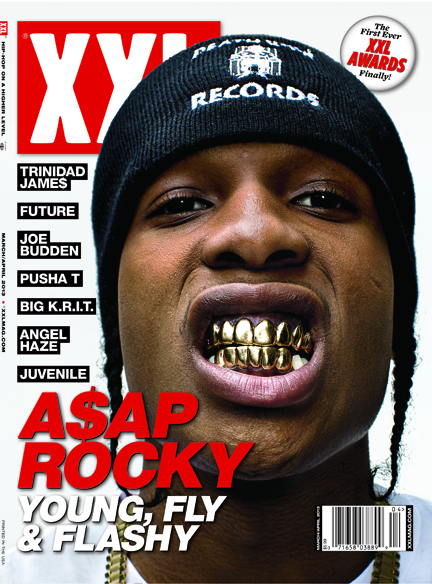
I have decided that on every issue of my magazine the picture of my artists on the cover will either be a close up shot like the one on the vibe issue I have decided to use and use a mid shot of the artist posing like A$AP ROCKY because I feel like that is the most effective in my magazine. i would like a similar housing style to be like the style of XXL magazine with the title in the top left corner and the bar code in the bottom right corner. I have decided that I would like a few of the things inside the magazine to be on the front cover for example, I would like to include interviews so id like them to be on the front also I want whoever is on the front of my magazine to be the main function of my magazine so id like the main part of the magazine to include them. I haven't yet decided what colours I want for my magazine front cover but I really like the black and white themed picture with the red and white writing for the title.
For my magazine I have decided to do it about the music genres Hip Hop and Grime music. The reason for this is simply because there isn't many magazines on these types of music. The other reason why I have chosen this genre is because I feel like I can relate to this genre I have a general idea about the genre and artist in the genre. I want my fonts to be simple but bold fonts so they can attract the attention for the audience of my magazine.
Thursday, 24 October 2013
Sunday, 20 October 2013
History of Music Magazines
The History of the Q magazine
Q, The biggest selling music monthly magazine. Q the brand that celebrates the biggest stars in rock and roll and brings you the most exciting new artists out there to date. over time the Q brand has grew a world wide reputation as a trusted premium quality voice of musical authority amongst fans. the reputation has grew not just through the magazine but through the internet their reputation has grew bigger from their magazines and their website. Q was first published in October in 1986 , setting it self apart from the other music magazine out there with its high standard of printing and photographs
Typical content in the Q magazine-
the magazine has an extensive review section, featuring new releases, music compilations film and concerts also radio and television reviews. Q magazine uses a star rating from one to five stars; the rating an album receives in Q is often added to print and television advertising for the album in the UK and Ireland. it also has a list of about 8 albums which is the category of the best new releases of the last 3 months.
Typical reader of the Q magazine-
According to valid statistics , the majority of Q’s readers are male, with the percentage for men being 66.2%. The statistics also show that 83.8% of the readers are 15-44 years of age. This shows that Q ability to make their magazine appeal across a wide range of audiences by doing section on today top artists like Adele and by doing interviews with people that don't necessarily feature in the top artists list anymore for example john Lennon etc.. To make them appeal to a wider range of an audience they do special for example on John Lennon's 70th birthday they done a John Lennon special.
What is the house style of Q like?
The Q magazine has a very consistent house style through out its magazine as the Q logo is always in the top left this means that when a reader is going to buy the magazine they know what they will be purchasing. on every copy they a similar look on the magazine making them look more professional and making it easier for the reader to read and enjoy the content.
How are the social groups represented?
social Groups are shown through the groups or artist chosen to be put in the magazine, Q has a wide audience as they do not focus on a set genre they aim their magazine at. They have genres from pop to rock so they have a wider audience to most magazines.
The History of Kerrang!
Kerrang! commenced publication on 6 June 1981 and was edited by Geoff Barton, initially as a one-time supplement in the Sounds newspaper, which focused on the New Wave of British Heavy Metal phenomenon and on the rise of other hard rock acts.Angus Young of AC/DC appeared on Kerrang!'s first cover. Launched as a monthly magazine, Kerrang! began to appear on a fortnightly basis later, and in 1987 it went weekly. The original owner was United Newspapers who then sold it to EMAP in 1991.
Typical Content -
Each issue will include a balance of bands and scenes to guarantee that we’re providing for our readers’ need for variety and their passionate appetite for their favourite bands as well as their desire to be introduced to new music within our world.
Typical Reader-
The typical reader is 16-25 year old. However ove the th years the ages of the reader have dropped with more teenagers buying and reading the magazine. I think this is because of all the new, young and upcoming bands cover the front of the magazine alot so its begining to have a younger appeal.
What is the house style like?
The Kerrang! house style has been very similar since it was plublish all them years ago. The house style of the magazine matches the genre from the off you just have to look at the master head with the cracks through the letter and jagged edges symbolise violnce that matches their genre of music.
Inside the magazine there is heavy vibe felt due to the dark colours that match the genre of music.
How are social groups represented?
Q, The biggest selling music monthly magazine. Q the brand that celebrates the biggest stars in rock and roll and brings you the most exciting new artists out there to date. over time the Q brand has grew a world wide reputation as a trusted premium quality voice of musical authority amongst fans. the reputation has grew not just through the magazine but through the internet their reputation has grew bigger from their magazines and their website. Q was first published in October in 1986 , setting it self apart from the other music magazine out there with its high standard of printing and photographs
Typical content in the Q magazine-
the magazine has an extensive review section, featuring new releases, music compilations film and concerts also radio and television reviews. Q magazine uses a star rating from one to five stars; the rating an album receives in Q is often added to print and television advertising for the album in the UK and Ireland. it also has a list of about 8 albums which is the category of the best new releases of the last 3 months.
Typical reader of the Q magazine-
According to valid statistics , the majority of Q’s readers are male, with the percentage for men being 66.2%. The statistics also show that 83.8% of the readers are 15-44 years of age. This shows that Q ability to make their magazine appeal across a wide range of audiences by doing section on today top artists like Adele and by doing interviews with people that don't necessarily feature in the top artists list anymore for example john Lennon etc.. To make them appeal to a wider range of an audience they do special for example on John Lennon's 70th birthday they done a John Lennon special.
What is the house style of Q like?
The Q magazine has a very consistent house style through out its magazine as the Q logo is always in the top left this means that when a reader is going to buy the magazine they know what they will be purchasing. on every copy they a similar look on the magazine making them look more professional and making it easier for the reader to read and enjoy the content.
How are the social groups represented?
social Groups are shown through the groups or artist chosen to be put in the magazine, Q has a wide audience as they do not focus on a set genre they aim their magazine at. They have genres from pop to rock so they have a wider audience to most magazines.
This shows how many male and females read Q and the ages of the reader.
Title
|
Total
|
Male
|
Female
|
Age range
|
ABC1
|
|||||
15-24
|
25-34
|
35-44
|
45-54
|
55-64
|
65+
|
|||||
Q
|
377000
|
68.3%
|
31.7%
|
35.5%
|
26.3%
|
19.8%
|
13.9%
|
3.1%
|
1.4%
|
70%
|
The History of Kerrang!
Kerrang! commenced publication on 6 June 1981 and was edited by Geoff Barton, initially as a one-time supplement in the Sounds newspaper, which focused on the New Wave of British Heavy Metal phenomenon and on the rise of other hard rock acts.Angus Young of AC/DC appeared on Kerrang!'s first cover. Launched as a monthly magazine, Kerrang! began to appear on a fortnightly basis later, and in 1987 it went weekly. The original owner was United Newspapers who then sold it to EMAP in 1991.
Typical Content -
Each issue will include a balance of bands and scenes to guarantee that we’re providing for our readers’ need for variety and their passionate appetite for their favourite bands as well as their desire to be introduced to new music within our world.
Typical Reader-
The typical reader is 16-25 year old. However ove the th years the ages of the reader have dropped with more teenagers buying and reading the magazine. I think this is because of all the new, young and upcoming bands cover the front of the magazine alot so its begining to have a younger appeal.
What is the house style like?
The Kerrang! house style has been very similar since it was plublish all them years ago. The house style of the magazine matches the genre from the off you just have to look at the master head with the cracks through the letter and jagged edges symbolise violnce that matches their genre of music.
Inside the magazine there is heavy vibe felt due to the dark colours that match the genre of music.
How are social groups represented?
the intentions of Kerrang! suggests that they will ensure that we are constantly appealing to our variety of readers. Kerrang appeals from younger teenagers to any age that actually respect Kerrang! and thoroughly enjoy that genre of music.
Thursday, 17 October 2013
David Carson
David Carson is rather unconventional when it comes to the world of designing his magazines. If you was to look a Ray gun as an example you would be able to see the clear differences from a tradition magazine and his magazines. David Carson has a rather inconsistent house style so if you was to buy his magazine you wouldn't know what to expect!. In every edition David Carson surprises the audience with wide imagination that makes his, work unique from all the typical magazines out there to date.
On a traditional magazine for example Q music magazine the master head is always at the top of the page and there is a mid shot of an artist ,glimpses of what the magazine will have in it down the sides of the page, however David Carson never fails to break the tradition and impress with his unique creative skill that makes him stand out from the rest of the designers. Looking at some of his most famous pieces you can see that David Carson is not afraid to change the house style of his magazine. Ray gun the master head is rarely positioned at the top of the page with an unusual picture or it being positioned oddly for example upside down.
The four F'S
Format - This is the magazines lay out including house style
Formula- This is the magazine and where does it go?
Frame - The margins and gutters in a magazine
Function - What's the magazines job? e.g. slogan or sums it up in a sentence
Formula- This is the magazine and where does it go?
Frame - The margins and gutters in a magazine
Function - What's the magazines job? e.g. slogan or sums it up in a sentence
Tuesday, 15 October 2013
Research Methods
Primary Research- Research done by myself for example Interview, questionnaire, survey and internet forum.
Secondary Research- Using research that someone else carried out for example search engine, website, book and magazine.
Primary Research Advantages and Disadvantages
Advantages-
Advantages-
Quantitative- Quantitative data refers to the numerical facts and figures that are collected during a research investigation . The data and or observations are then analysed and used to interpret a situation or event.
Qualitative- Qualitative methods are ways of collecting data which are concerned with describing meaning, rather than with drawing statistical inferences.
Secondary Research- Using research that someone else carried out for example search engine, website, book and magazine.
Primary Research Advantages and Disadvantages
Advantages-
- the data that you would have collected would of be accurate
- the results would be up to date and more reliable
- you can find out exactly what you want/ need to know.
- this Research method can be found to be very time consuming to find out all the information needed.
- you have to manage your time efficiently if you have intentions of doping an interview or questionnaire involving the public.
Advantages-
- it is easy to access online
- it is cheap to use or it can even be free.
- it is always available to be used whether its online or some form of document.
- Can be unreliable you don't know if they information is correct.
- The information might be really out of date.
- the information might not be 100 per cent what you were looking for and be linked to something else.
Quantitative- Quantitative data refers to the numerical facts and figures that are collected during a research investigation . The data and or observations are then analysed and used to interpret a situation or event.
Qualitative- Qualitative methods are ways of collecting data which are concerned with describing meaning, rather than with drawing statistical inferences.
Wednesday, 9 October 2013
Definitions
Bleed- what is bleed? Bleed is a term used for print advertising that extends all the way to the edge of the page with no margin. Magazines charge a premium for the bleed which is usually 15%.
Why do we need bleed? We need it because it’s very difficult to print exactly to the edge of the paper/card so it’s necessary to print to a slightly larger area than needed and then trim down the paper to the required finished size. Background images and fills which are intended to extend the most extended beyond the trim line to give a bleed.
How will I use bleed in my magazine? I will display bleed in my magazine by creating an extended section added onto the page.
Copy- an imitation or reproduction of an original for example a duplicate.
Strapline- a sub heading in a newspaper, magazine or any advertisement
I will use a strapline in my magazine to grab the attention of readers who like the same music as my magazine.
Tagline- an often repeated phrase usually associated with an individual, organisation or product. (A slogan) I will use a tagline in my magazine to be cleaver and make my magazine stand out from the others.
Pull Quote- a significant passage in an article that is quoted and used for drawing attention to its source. The pull quote will be used when I’m doing my magazine when an article leads on.
Bleed- what is bleed? Bleed is a term used for print advertising that extends all the way to the edge of the page with no margin. Magazines charge a premium for the bleed which is usually 15%.
Why do we need bleed? We need it because it’s very difficult to print exactly to the edge of the paper/card so it’s necessary to print to a slightly larger area than needed and then trim down the paper to the required finished size. Background images and fills which are intended to extend the most extended beyond the trim line to give a bleed.
How will I use bleed in my magazine? I will display bleed in my magazine by creating an extended section added onto the page.
Gutter-a gutter is the middle of the page where two pages are separated. I will use a gutter to separate two pages from each other and also use it as a margin for the text on my double page.
Pug- not commonly used in England however it’s the when the corner of the page is covered it usually has a buzz word inside of it. I’d use this on my front cover of my magazine because it would give you the incentive to open it.
Copy- an imitation or reproduction of an original for example a duplicate.
Strapline- a sub heading in a newspaper, magazine or any advertisement
I will use a strapline in my magazine to grab the attention of readers who like the same music as my magazine.
Tagline- an often repeated phrase usually associated with an individual, organisation or product. (A slogan) I will use a tagline in my magazine to be cleaver and make my magazine stand out from the others.
Pull Quote- a significant passage in an article that is quoted and used for drawing attention to its source. The pull quote will be used when I’m doing my magazine when an article leads on.
Pug- not commonly used in England however it’s the when the corner of the page is covered it usually has a buzz word inside of it. I’d use this on my front cover of my magazine because it would give you the incentive to open it.
Gutter-a gutter is the middle of the page where two pages are separated. I will use a gutter to separate two pages from each other and also use it as a margin for the text on my double page.
Thursday, 3 October 2013
Ideology
This is a rap Magazine called vibe I am going explain how the front cover fits the genre.
The image of Eminem fits the genre because the genre is portrayed as physco and rap about murder so this image is only fitting that it is on the front cover because when you look at eminem you see the tatoos on his arms this makes him seem rebelious. Also the colour sheme of the magazine helps show the feeling of eminem because red is used to symbolise anger which is what his facial expressions shown.
This is a pop magazine aimed at the younger generation and the colours show that it is mainly aimed at the female gender. They have used well known and loved icons that will attract the target audiences attention. The colours used also suit the genre because they want the magazine to appeal to a younger audince, therefore the have put girly colours and imagaes such as clothes and fashion icons which make the magazine more suited to its genre.
Comparisons of the two magazines:
Both magazines use colour to attract their target audience and help portray the mood of their magazine. the first magazine wants to create a more adult mood and give a more serious feel to the magazine by usinging darker colours such as black, where as the second magazine uses brighter colours to portray a happier mood that suits the target audience of a younger age.
also layout is key on both magazine covers, the first magazine is more spacious and spread out with not many captions and only one picture of a well known famous icon, this has more of an adult appeal because adults don't want to know gossip and rumours of relationships. However the second magazine is the opposite, it has filled the cover with images and captions of well known icons to fit with the genre and audience is wants to appeal to, this is more suited to a younge audience as they want a window into the lives of their favourite celebrity and they want to know the latest fashion trends.
The image of Eminem fits the genre because the genre is portrayed as physco and rap about murder so this image is only fitting that it is on the front cover because when you look at eminem you see the tatoos on his arms this makes him seem rebelious. Also the colour sheme of the magazine helps show the feeling of eminem because red is used to symbolise anger which is what his facial expressions shown.
This is a pop magazine aimed at the younger generation and the colours show that it is mainly aimed at the female gender. They have used well known and loved icons that will attract the target audiences attention. The colours used also suit the genre because they want the magazine to appeal to a younger audince, therefore the have put girly colours and imagaes such as clothes and fashion icons which make the magazine more suited to its genre.
Comparisons of the two magazines:
Both magazines use colour to attract their target audience and help portray the mood of their magazine. the first magazine wants to create a more adult mood and give a more serious feel to the magazine by usinging darker colours such as black, where as the second magazine uses brighter colours to portray a happier mood that suits the target audience of a younger age.
also layout is key on both magazine covers, the first magazine is more spacious and spread out with not many captions and only one picture of a well known famous icon, this has more of an adult appeal because adults don't want to know gossip and rumours of relationships. However the second magazine is the opposite, it has filled the cover with images and captions of well known icons to fit with the genre and audience is wants to appeal to, this is more suited to a younge audience as they want a window into the lives of their favourite celebrity and they want to know the latest fashion trends.
Magazine Front cover.
this is the front cover of a school magazine that i have designed in AS media i am going to talk about some of the features of the magazine and why i have chosen them.
My sub heading is red and stands out from the rest of the magazine; the
reason why I have done this is because I wanted the audience to know what the
main story of the magazine would be about so they could see what the school is
like from a different perspective from. I chose the colour red because my theme
throughout the magazine would be white and red, so because of the white
background the titles in the red would stand out so the reader would be fully
aware what the next article would be about. It would also make the articles
more appealing to the reader because of the house colours and how they stand
out from the rest of the magazine.
Subscribe to:
Comments (Atom)


